
Off-Grid Tiny Homes:
The 2026 Reality Check
Not a survival fantasy. Not a YouTube aesthetic. In 2026, off-grid tiny home living is the fastest-growing intentional housing path in America — driven by rising energy costs, grid fragility, and a generation that's done outsourcing its resilience.
Off-Grid Is a Spectrum — Not a Binary
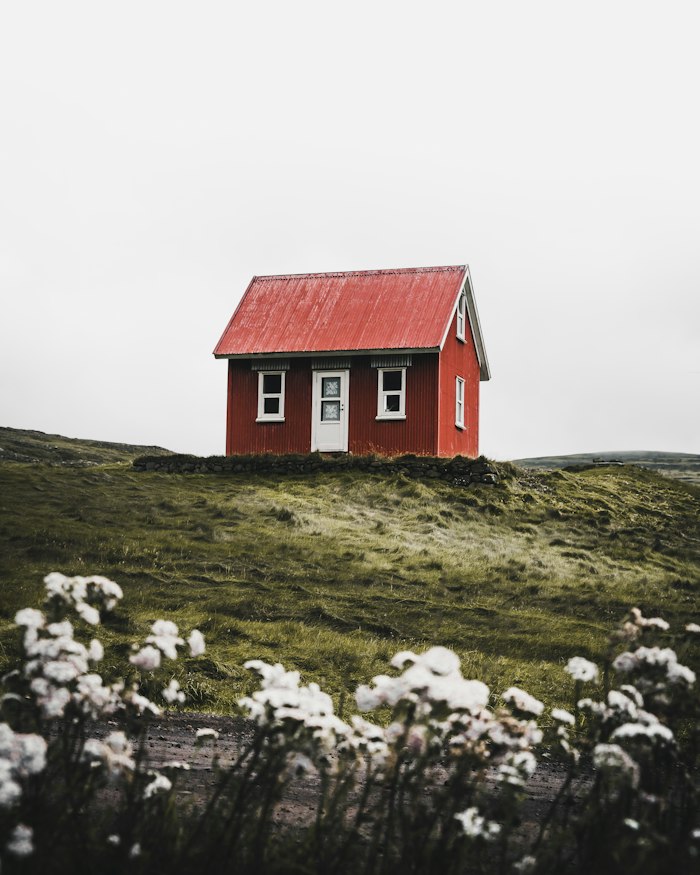
Off-grid tiny homes are small, stationary or semi-mobile dwellings — typically under 600 sq ft — designed to operate independently from public utility systems for power, water, and waste. The defining feature is self-sufficiency, not size. A grid-connected tiny house is just a small house. An off-grid tiny home is a different kind of infrastructure.
What competitors miss: most successful off-gridders don't go 100% off-grid overnight. The movement is increasingly about incremental independence — solar first, well water next, then food production. Full disconnection is the destination; partial self-sufficiency is the realistic starting point for most people.
The NestPaths angle: Off-grid tiny home living is uniquely positioned as both a permanent lifestyle and a resilience foundation for anyone planning a major relocation — domestic or international. We cover both use cases here.
- People prioritizing independence from utility companies and grid fragility
- Remote workers and digital nomads with location-flexible income
- Homesteaders and those pursuing food production and land stewardship
- Those preparing for long-term economic or infrastructure uncertainty
- Retirees and families seeking low monthly costs after an upfront build
- Anyone planning an international relocation who needs a low-overhead base first
- Anyone needing daily access to urban services, hospitals, or specialist care
- People uncomfortable managing utilities, maintenance, and troubleshooting
- Those without access to suitable land (or the capital to purchase it)
- Anyone expecting immediate cost savings — upfront investment is substantial
- Those in states with strict zoning, composting toilet bans, or water rights restrictions
The Real Cost Breakdown — 2026 Data
Off-grid tiny home living requires a significant upfront capital investment. The payoff is drastically reduced monthly costs — often $500–$2,000/month after setup — for the rest of your time there. Here's where the money goes.
After build, monthly costs drop to $500–$2,000 for property taxes, fuel, supplies, and maintenance — compared to a Tennessee family example paying $800–$1,000/month after moving off-grid from urban life.
Systems Comparison: Power, Water & Waste
Off-grid living means owning your utility systems. Choosing the right setup for your land, climate, and budget is the most important technical decision you'll make. Here's how the options compare.
⚡ Power Systems
| System Type | Cost Range | Best For | Limitation | 2026 Recommendation |
|---|---|---|---|---|
| Solar + LiFePO4 Batteries | $15K–$60K | Most climates, remote work | Cloudy regions need oversizing | Top Choice 2026 |
| Solar + Propane Backup | $12K–$35K | Budget builds, northern climates | Propane cost/supply dependency | Good Hybrid Option |
| Solar + Wind Hybrid | $25K–$70K | Windy/coastal locations | Wind turbine maintenance + noise | Niche — site dependent |
| Generator Only | $2K–$8K | Temporary / backup only | Fuel cost, noise, ongoing expense | Not Recommended Alone |
💧 Water Systems
| System Type | Cost Range | Best For | Key Requirement | Verdict |
|---|---|---|---|---|
| Drilled Well + Solar Pump | $10K–$30K | Most rural properties | State/county permit, soil test | Most Reliable Long-Term |
| Rainwater Harvesting + Filtration | $5K–$15K | High-rainfall regions (WA, OR, Southeast) | Often no permit needed (check county) | Great in Wet Climates |
| Spring / Surface Water | $3K–$12K | Mountain/forest properties | Water rights, filtration, legal access | Site-Specific Only |
| Water Hauling (short-term) | $50–$200/mo | Starting out / testing site | Not viable long-term | Transition Only |
In WA state: wells require DOE approval. Septic required for full-time living in most counties — budget $10K–$20K. Composting toilets face county-by-county restrictions; always verify before building.
Best U.S. States for Off-Grid Tiny Homes
Where you build matters as much as how you build. State laws, land costs, solar potential, and zoning flexibility vary enormously. Based on a 19-factor analysis covering affordability, legal freedom, climate, and resources — here are the top picks for 2026.
If you're in Washington State and considering off-grid, eastern WA (Okanogan, Stevens, Ferry counties) is dramatically more favorable than western WA — cheaper land, more solar hours, more permissive rural zoning. The Cascade Mountains are your dividing line. By 2026, WA state allows 2 RVs per lot with looser rules, which can serve as a first step while you plan a permanent off-grid build.
Off-Grid Readiness & Budget Estimator
Answer 5 questions to get a personalized budget range and payback timeline — plus an honest readiness score for your situation.
after setup complete
Compare off-grid build costs vs. cost of living in your top relocation destinations
Big Constraints — Explained Honestly
Off-grid living requires more upfront due diligence than almost any other housing path. Here are the four areas that derail the most people — and how to navigate them before you commit.
This is the #1 killer of off-grid plans. Many counties prohibit composting toilets, require connection to municipal water, or ban full-time RV/tiny home living on raw land. Always verify county-level rules — state laws can be permissive while individual counties are not.
- Check before buying: Call the county planning office and ask specifically: "Can I build a full-time dwelling on this parcel and live off-grid with composting toilet and well water?"
- Ag-zoned parcels in rural counties are typically the most permissive — look for these first
- Building codes: Many counties require permitted structures to meet minimum sq footage and utility connection standards
- Deed restrictions: Some private land sales include HOA-style covenants that restrict off-grid systems
- In Washington State: septic is required for full-time living in most counties — budget $10K–$20K and verify soil suitability before buying
The tiny home itself is often the cheapest part of an off-grid build. The infrastructure — solar, well, septic, road, site prep — routinely costs more than the structure. This shocks first-time builders.
- A $30,000 DIY cabin can easily require $50,000–$80,000 in infrastructure to make it livable off-grid
- Hidden costs include: soil testing, permits, delivery fees for remote land, utility connection for construction power, temporary water hauling during build
- Phase your build: start with temporary systems (RV, water hauling, generator) while permanent systems are being installed
- Always add 20–30% contingency to any off-grid build budget — surprises are the norm, not the exception
The romanticized version of off-grid tiny home life assumes you're retired or farming full-time. For remote workers, connectivity is non-negotiable — and it requires planning before you choose a site.
- Starlink: $120/mo + $599 equipment, works most rural locations with sky view. The closest thing to a reliable off-grid internet solution that exists. Test your specific land before buying
- Cell signal: Check coverage maps for T-Mobile and Verizon at your exact parcel coordinates — not just the nearest town
- Emergency access: How far is the nearest fire station, hospital, and paved road? This matters especially for health conditions and family situations
- Some off-grid properties are accessible only by 4WD or seasonally — factor this into daily life, not just the buying decision
Off-grid living means you are the utility company. When the well pump fails, the solar controller glitches, or the septic needs pumping — that's your problem, your time, and your budget. This requires a different skill set than most housing paths.
- Budget $200–$400/month for ongoing maintenance, parts, and eventual system replacement
- LiFePO4 batteries: 10–15 year lifespan, then $5K–$20K for replacement — factor this into long-term planning
- Septic pumping: every 3–5 years ($300–$600), required for system longevity
- Solar panels: rated for 25 years but output degrades ~0.5% annually
- Learn basic plumbing, electrical, and system troubleshooting before you move in — not after
Off-Grid as a Resilience Bridge
This is what makes NestPaths different. We see off-grid tiny home living not just as a permanent lifestyle — but as a foundational resilience move that protects you during transition. With oil at $112+, grid disruptions rising, and economic uncertainty near record highs, owning your infrastructure buys you something money alone can't: optionality.
Eliminate your monthly overhead exposure
At $500–$2,000/month after build, an off-grid tiny home dramatically reduces your break-even income. That means you need less from a job, a client, or a pension — which is freedom.
Build skills that translate internationally
Off-grid living develops practical competencies — solar, water systems, food production, construction — that are directly applicable if you relocate to rural Portugal, Panama, Mexico, or Southeast Asia. The learning is transferable.
Use the land as an asset while you plan
Rural land with off-grid improvements can be rented, leased for farming, or used for short-term stays via HipCamp/Airbnb while you spend time abroad testing international relocation options.
Hedge against June–November 2026 volatility
With Hormuz closed and grid stress rising, owning your power, water, and food production is the most practical resilience strategy available to a U.S. household in 2026. The off-grid tiny home is your infrastructure hedge.

Keep your off-grid land as a base and income asset. Use the low monthly cost to fund your visa application and international move.
→ Explore Visa PathsVan life is a lower-capital way to test location independence before committing to off-grid land ownership. Compare both paths.
→ See Van & Mobile LivingAn off-grid tiny home is the most complete emergency resilience setup you can build. Pair it with our WA Emergency Readiness guide.
→ Emergency Readiness GuideReady to Plan Your Off-Grid Path?
Whether you're building toward long-term self-sufficiency, protecting against grid fragility, or using an off-grid base to fund an international move — NestPaths has the tools to help you plan with real 2026 numbers.