
Alterntive PathS
Whether you live in a studio, shared home, van, or small apartment, this path helps you design a life that fits your space and goals — not the other way around.

Urban & Shared Paths
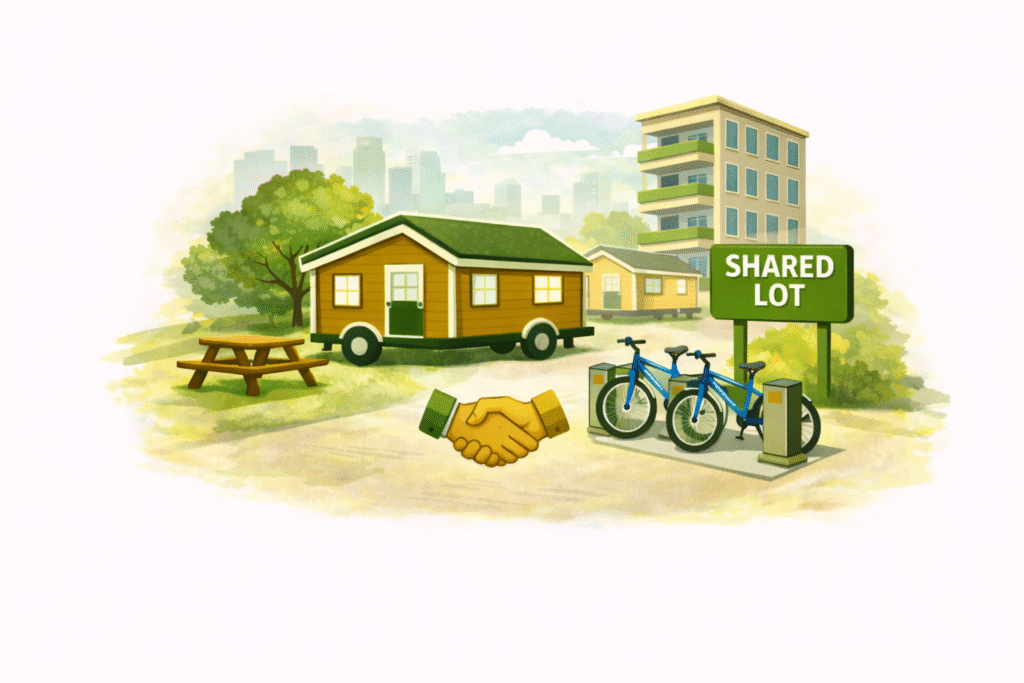
Explore co-living, shared housing, and compact city design models that balance affordability, connection, and sustainability.
| Type | Description | Ideal For |
|---|---|---|
| Co-Living Apartments | Private rooms in shared apartments with kitchens, lounges and social amenities — all-inclusive and community-oriented. | Remote workers, students, newcomers |
| Shared Housing & Flatshares | Private bedrooms inside shared houses or apartments — cost-effective rental with community elements. | Young professionals, relocators, budget renters |
| Micro-Apartments | Ultra-compact city units designed for maximum efficiency and lower cost in dense urban areas. [oai_citation:0‡Apartment List](https://www.apartmentlist.com/renter-life/micro-apartments?utm_source=chatgpt.com) | Minimalists, singles, city dwellers |
| Community Housing Projects | Cooperative or non-profit housing models offering shared facilities, communal decision-making, and affordability. | Families, community advocates |
| Urban Eco-Communities | Green-building communities with shared gardens, renewable systems and communal amenities designed for sustainable living. | Sustainability-minded residents |
Tools & Resources
Start exploring your path
Co-Living & Shared Space Finder – Directory of trusted platforms and projects.
Urban Mobility & Walkability Maps – Explore transit accessibility and walkability data tools.
Roommate & Lease Agreement Templates – Use cooperative housing networks for template files and shared-housing contracts.
Smart Storage & Small-Space Hacks – While this link reviews neighborhood mapping, you can link to curated content on compact-space living here.
Mobile & Modular Paths
The Mobile & Modular Paths offer real-world tools and verified programs that support flexible, factory-built, and relocatable housing.
This section connects you with cost estimators, government compliance guides, modular financing options, and installation resources to help you build smart and move efficiently.
Where to Begin
Understand Modular Regulations: Review local and federal standards before investing or relocating a unit.
Use Planning Tools: Estimate setup costs, permits, and utility connections.
Explore Certified Builders: Choose suppliers who meet HUD and Modular Building Institute standards.
Find Support Programs: Discover government incentives, loan programs, and nonprofits that assist with modular and affordable housing development.
Mobile & Modular Resource Directory
Verified data sources and tools to help you plan, finance, and install modular or manufactured housing projects with ease.
| Resource | Purpose | Best For |
|---|---|---|
| Modular Building Institute (MBI) | Industry authority offering certified modular builder directories, code guidance, and educational materials. | Builders, homeowners, project planners |
| HUD Manufactured Housing Program | Federal compliance and safety standards for manufactured and modular housing, including inspection and installation rules. | Homeowners, state housing agencies |
| DOE Prefabricated Building Efficiency Tools | Energy modeling, weatherization programs, and lifecycle studies for modular building efficiency. | Sustainability planners, off-grid developers |
| Fannie Mae Manufactured Housing Loans | Financing options and lender resources for qualified modular or manufactured housing units. | Homebuyers, financial institutions |
| Habitat for Humanity Modular Initiatives | Nonprofit-led affordable modular builds, including volunteer programs and community-based development models. | Community leaders, nonprofit developers |
Helpful Tools:
• Modular Building Institute – Global modular standards and certification.
• HUD Manufactured Housing Program – Federal housing codes and inspections.
• DOE Prefab Building Tools – Energy efficiency and lifecycle data.
• Fannie Mae Modular Loans – Financing for qualified modular buyers.
• Habitat for Humanity – Affordable modular builds and community projects.
Build Smart, Move Freely
The Mobile & Modular Paths are about speed, structure, and adaptability — blending innovation with practicality.
Whether you’re building your first modular home, managing a relocation project, or seeking energy-efficient construction models, these verified resources guide your next move with clarity and credibility.
Minimalist & Sustainable Paths
Live Simply. Build Wisely.
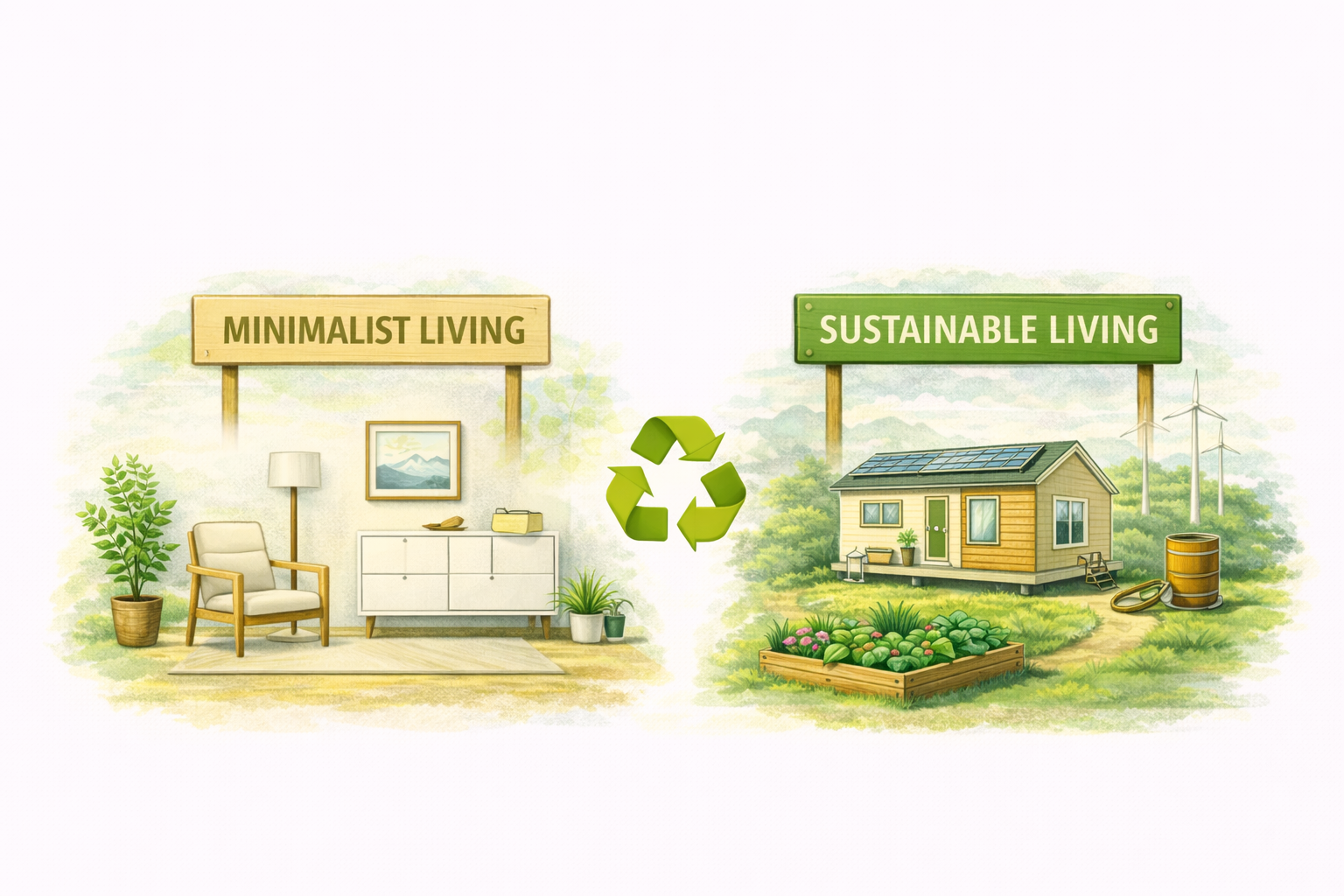
The Minimalist & Sustainable Paths focus on intentional living — reducing waste, maximizing function, and embracing eco-conscious design.
These approaches encourage smarter choices about what you own, how you build, and the impact your home has on the planet and community around you.
Why Choose This Path
Lower Environmental Impact: Smaller spaces and renewable materials mean a lighter carbon footprint.
Financial Freedom: Living with less reduces upkeep, energy bills, and debt — freeing resources for experiences, travel, or investment.
Health & Wellbeing: Minimalism clears visual and mental clutter, creating calm, restorative environments.
Durability & Efficiency: Sustainable designs focus on long-lasting materials, energy efficiency, and passive heating/cooling.
Resilience: Eco-friendly homes are easier to maintain off-grid and more adaptable during resource shortages or relocations.
Minimalist & Sustainable Paths
Simplify your space, amplify your life. Discover design approaches and lifestyle models that prioritize efficiency, mindfulness, and eco-conscious living — creating homes that give back more than they take.
| Approach | Description | Ideal For |
|---|---|---|
| LEED & Passive House Design | Homes built with advanced insulation, natural light, and energy-efficient systems that minimize carbon emissions. | Eco-builders, urban developers, green homeowners |
| Zero-Waste Living | A lifestyle focused on reducing waste through reuse, repair, composting, and mindful consumption. | Minimalists, eco-conscious families, sustainability advocates |
| Eco Villages & Intentional Communities | Shared land and resources with sustainable food systems, renewable energy, and collaborative living. | Community builders, families, off-grid enthusiasts |
| Energy-Efficient Homes | Smart architecture using solar panels, natural ventilation, and high-efficiency systems to lower energy use. | Homeowners, small developers, climate-conscious dwellers |
| Recycled & Natural Materials | Use of reclaimed wood, bamboo, cork, clay, or hempcrete for long-lasting, toxin-free, and eco-friendly construction. | DIY builders, eco-designers, sustainable architects |
Helpful Tools:
• LEED Green Building Certification – Sustainable standards and project database.
• Global Ecovillage Network – Connect with intentional sustainable communities.
• Green Building Advisor – Practical guides and energy modeling tools.
• Zero Waste Home Toolkit – Everyday habits for low-impact living.
• U.S. Department of Energy Efficiency Hub – Tools and incentives for efficient homes.
How to Get Started
Declutter with Purpose: Identify what supports your lifestyle — and what doesn’t.
Choose Sustainable Materials: Look for bamboo, reclaimed wood, cork, or recycled steel.
Optimize Energy Use: Incorporate solar panels, LED lighting, and efficient insulation.
Design for Function: Every inch counts — embrace multi-use furniture, vertical storage, and compact layouts.
Connect with Values: Align your home with principles of community, circular economy, and ethical consumption.
Tools & Resources
LEED Green Building Certification — Guidelines for sustainable design and construction
Tiny House Sustainable Materials Guide — Practical insights for eco-friendly materials
Global Ecovillage Network — Community models built on sustainability principles
Energy.gov Home Efficiency Resources — Government resources on efficient home design
Zero Waste Home Toolkit — Step-by-step habits for minimalist living
NestPaths Insight
Minimalist and sustainable living isn’t about restriction — it’s about liberation.
Every choice becomes intentional: every item purposeful, every resource valued.
These paths are for those who seek balance between simplicity and resilience — creating homes that nurture both people and planet.
Creative Housing Paths
New housing solutions are emerging for a world in motion — fusing technology, art, and social innovation.
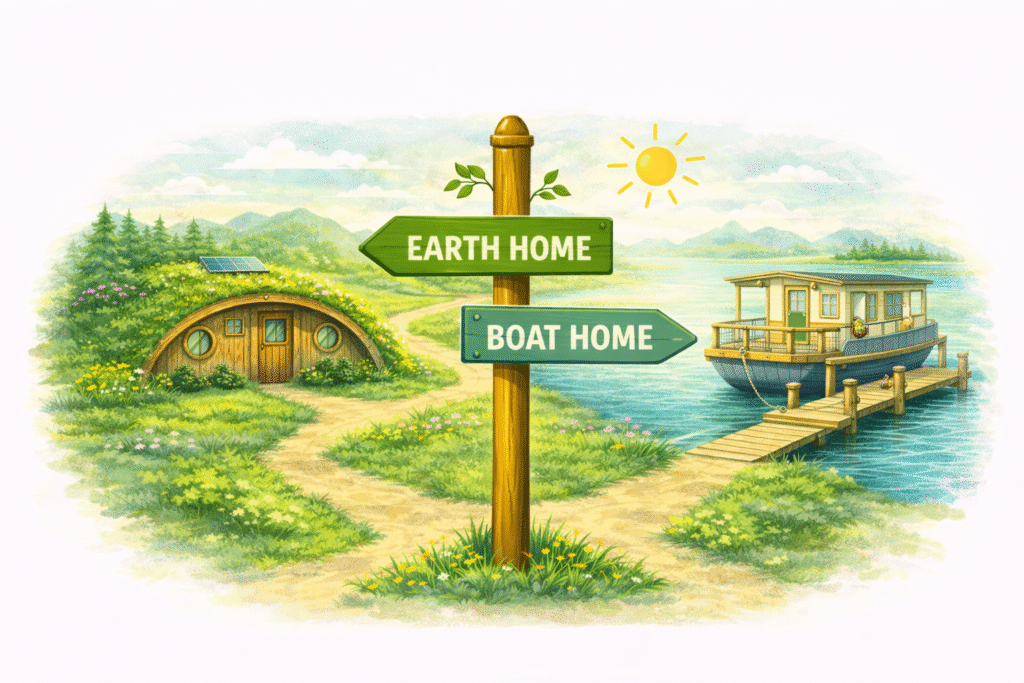
This path explores boundary-pushing models like 3D-printed communities, floating eco-homes, and adaptive reuse — ideal for dreamers, designers, and changemakers looking to redefine what home can mean.
Creative Housing Paths
Explore the future of housing — where innovation meets imagination. From adaptive reuse to 3D-printed homes and floating villages, creative housing paths redefine what it means to build, live, and belong.
| Concept | Description | Ideal For |
|---|---|---|
| 3D-Printed Homes | Constructed using large-scale 3D printers, these homes offer quick, affordable, and sustainable building solutions. | Innovators, sustainable developers, rapid-housing projects |
| Adaptive Reuse Projects | Transforming existing structures — warehouses, churches, or containers — into functional, modern homes or micro-communities. | Urban pioneers, artists, sustainable designers |
| Cooperative & Co-Design Housing | Residents collaborate in design, funding, and management — creating community-driven, affordable housing ecosystems. | Collaborative communities, urban co-living advocates |
| Floating & Amphibious Homes | Sustainable water-based dwellings that rise and fall with tides, providing flood-resistant, climate-adaptive housing. | Coastal residents, climate innovators, architects |
| Micro & Modular Hybrid Homes | Compact hybrid designs combining modular, mobile, and sustainable construction for quick deployment in urban or rural areas. | Young professionals, small families, emergency housing planners |
Helpful Tools:
• ICON Build – Leading 3D printing construction technology.
• ArchDaily Adaptive Reuse – Global examples of creative repurposing.
• CoHousing Association – Directory of collaborative and co-designed living models.
• Dezeen Floating Homes – Water-based architecture inspiration.
• Habitat for Humanity Micro Homes – Affordable and space-saving design ideas.
From Planning to Action
Not all paths are about design — some are about direction.
This section gathers verified organizations, data portals, and official programs to help you plan, budget, and build with confidence.
Whether you’re seeking affordable housing, researching relocation trends, or upgrading your energy use, these resources keep your path grounded in real-world tools.
Practical Resources Paths
Access the essential tools, directories, and guides that help you take real steps toward building, relocating, or maintaining a sustainable home. This path connects you with trusted data sources, cost estimators, and planning materials for every stage of your housing journey.
| Resource | Purpose | Best For |
|---|---|---|
| HUD Housing Counseling Directory | Find certified housing counselors for guidance on homebuying, renting, budgeting, and foreclosure prevention. | First-time buyers, low-income families, renters in transition |
| U.S. Census Housing Data | Access national and regional data on housing affordability, population trends, and income demographics. | Researchers, analysts, relocation planners |
| DOE Energy Saver Tools | Energy cost calculators, home efficiency upgrades, and renewable resource guidance for sustainable housing. | Homeowners, builders, sustainability advocates |
| National Association of Home Builders (NAHB) | Industry insights, building standards, and market data for professionals and homeowners building or renovating. | Developers, contractors, aspiring builders |
| Habitat for Humanity | Global non-profit offering affordable homebuilding programs, volunteer opportunities, and community resilience projects. | Low-income families, volunteers, global housing advocates |
Helpful Tools:
• HUD Housing Counseling – Free national assistance network.
• U.S. Census Data Portal – Reliable metrics for relocation and affordability planning.
• DOE Energy Saver – Upgrade calculators and efficiency incentives.
• NAHB Home Builders Association – Policy updates and educational materials.
• Habitat for Humanity Global Network – Volunteer and homebuilding opportunities.